Easter Oratorio (BWV 249)

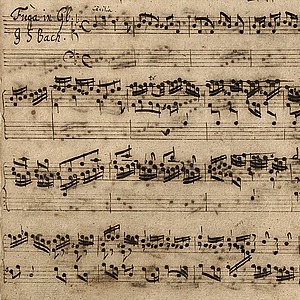
The Easter Oratorio (BWV 249), is an oratorio by Johann Sebastian Bach, beginning with Kommt, eilet und laufet (“Come, hasten and run”). Bach composed it in Leipzig and first performed it on 1 April 1725.

the Easter Oratorio has no narrator but has four characters assigned to the four voice parts: Simon Peter (tenor) and John the Apostle (bass), Mary Magdalene (alto) and Mary Jacobe (soprano).

The oratorio opens with two contrasting instrumental movements, an Allegro concerto grosso of the full orchestra with solo sections for trumpets, violins and oboes, and an Adagio oboe melody over “Seufzer” motifs (sighs) in the strings.

The first duet of the disciples was set for chorus in a later version, the middle section remaining a duet. Many runs illustrate the movement toward the grave.

Saget, saget mir geschwinde, the aria of Mary Magdalene, is based on words from the Song of Songs, asking where to find the beloved.

The final movement in two contrasting sections resembles the Sanctus composed for Christmas 1724 and later part of the Mass in B minor.

Let me introduce you to this version by the Netherlands Bach Society, recorded in 2017 in Amsterdam.

Cette page est aussi disponible en Français

About This Favourite

Title
Album
Released on
Performers
Composers
Composed in
Tags

More Favourites

Follow The Note Bar

Leave a comment

Subscribe
Notify of
guest
0 Comments
Oldest
Newest Most Voted

Discover my new composition

Il est vivant comme il l'avait promis - Canon - Score Cover

Il est vivant comme il l’avait promis – Canon

I originally composed Il est vivant comme il l’avait promis – Canon for the community of Taizé. Unfortunately, since Jacques Berthier (the composer who wrote the majority of the Taizé songs) passed away, the brothers decided to compose their songs themselves and therefore, kindly refused this song. However, this piece was published in the national magazine Voix Nouvelles n°108 in 2018.

0 comments

Discover my new composition

Dieu notre Père, voici le pain - Score Cover

Dieu notre Père, voici le pain

This canon offertory is the very first song I wrote in 1993, I was 17 years old. Published in the magazine Chantons en Eglise n°112, Dieu notre Père, voici le pain has been selected for the Bishop’s Ligurgical Song Promotion in 2010, which selects the 20 best songs of the year to promote in French parishes.

0 comments
0
Would love your thoughts, please comment.x
()
x
The Note Bar Newsletter

Subscribe to the Note Bar Newsletter and get my music directly to your email inbox.

Thank you for subscribing.

Something went wrong.

Partager avec un ami